


Built For Real: Choosing the Right Material for the Job

Choosing the wrong material can compromise performance, increase maintenance, shorten lifespan, and create unnecessary operational challenges. At Entech, material selection is never based on appearance alone. Every project requires balancing structural performance, environmental exposure, fabrication methods, weight, maintenance, installation conditions, and long-term durability. The right material choice can improve reliability, reduce installation challenges, extend lifespan, and ultimately determine the success of a project.
This month’s Built for Real explores how Entech evaluates materials like fiberglass reinforced plastic (FRP), steel, aluminum, and specialty finishes to ensure every system is designed for the real-world conditions it will face. From themed environments and iconic structures to interactive exhibits and architectural elements, selecting the right material is one of the most critical decisions in the engineering process.
Understanding the Strengths of Each Material
Every material behaves differently under load, weather exposure, fabrication, and long-term use. Choosing the correct solution means understanding not only the strengths of a material, but also its limitations.
Steel is often selected for structural strength, rigidity, and load-bearing capability. Aluminum may be preferred when reducing weight and corrosion is a priority. FRP offers unique advantages for complex geometry, scenic integration, and corrosion resistance. Finishes and coatings add another layer of protection, helping systems withstand UV exposure, moisture, abrasion, and environmental wear over time.
Production Manager Chris Gaines explains that environmental exposure and long-term durability are some of the most important considerations during fabrication planning.
“Environmental conditions and long-term durability are major factors in material selection during fabrication planning because the materials must continue to perform safely, look good, and resist damage over time.”
For outdoor installations, this means accounting for rain, humidity, sunlight, heat, cold, and wind. Materials exposed to moisture can rust, weaken, or deteriorate if they are not properly selected or protected. UV exposure can also cause fading, cracking, or brittleness in certain plastics and coatings over time. Because of this, Entech carefully evaluates materials based on the conditions they will face throughout their lifecycle. Depending on the application, projects may incorporate stainless steel, powder-coated aluminum, weather-resistant composites, HDPE plastics, or specialized coatings designed for exterior durability.
Guest interaction also plays a major role in material selection. “Surfaces that are touched repeatedly must resist scratches, dents, corrosion, and general abrasion.” Interactive environments and high-traffic areas often require reinforced metals, impact-resistant materials, or protective finishes that can withstand years of use while remaining safe and visually consistent.
Engineering Beyond the Drawing
Selecting the right material often begins long before fabrication starts. Environmental exposure, wind loads, maintenance requirements, shipping constraints, and installation logistics all influence the decision-making process.
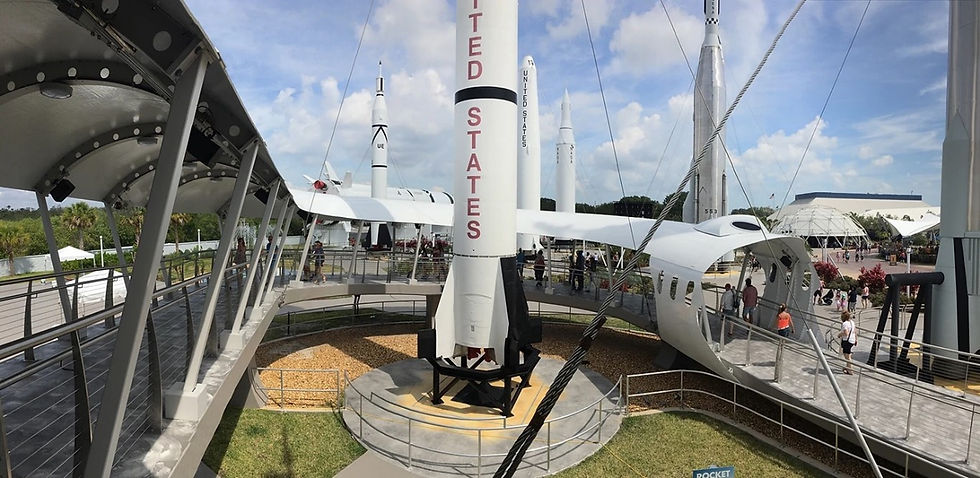
A strong example of this approach can be seen in Entech’s work on the Heroes and Legends canopy project at Kennedy Space Center Visitor Complex. During early design discussions, the team evaluated concrete, aluminum, and FRP as potential material solutions. Each came with different technical and operational challenges. Concrete introduced significant site labor and consistency concerns. Aluminum presented difficulties related to forming large structural sections while meeting coastal wind load requirements. FRP ultimately became the preferred solution after extensive engineering and material testing validated its performance capabilities.
The result was a lightweight yet durable structure capable of meeting strict environmental and structural demands while supporting the project’s creative intent.
Chris notes that selecting the proper material ultimately comes down to balancing several interconnected factors: “Environmental resistance. Strength and durability. Guest safety and interaction. Maintenance requirements. Weight and installation needs. Cost and expected lifespan.” These evaluations help ensure that material selection supports not just the initial build, but the long-term success of the project.
More Than Just Structure
Material selection also impacts fabrication efficiency, installation sequencing, maintenance access, and long-term serviceability. A material that performs well structurally may create challenges during fabrication or transportation, while another may simplify installation and reduce long-term maintenance requirements.
Weight is another major consideration. Aluminum and FRP can simplify transportation and installation due to their lighter weight, while steel may be selected when maximum structural strength is required. Fabrication methods, cost, and ease of maintenance all contribute to the final decision-making process.
Entech’s experience across fiberglass, composites, structural metals, coatings, and scenic systems allows the team to evaluate projects holistically rather than through a single discipline. This flexibility is especially important on large-scale custom projects where no off-the-shelf solution exists. Finishes and coatings are equally important to long-term performance. UV-resistant coatings, corrosion-resistant primers, specialty paint systems, and protective sealants all contribute to durability in outdoor and high-traffic environments. Selecting the proper finish can dramatically improve resistance to fading, moisture intrusion, abrasion, and corrosion over time.
The best material is not always the strongest, the lightest, or the least expensive. It is the material that best supports the project’s performance, environment, maintenance needs, fabrication realities, and creative goals. At Entech, material selection is part of the engineering process from day one. By carefully evaluating every condition a project will face, our team creates solutions that are not only visually successful but designed to perform reliably long after installation.


Comments